
Facial Redness and Couperose: What Really Helps?
Red cheeks, visible blood vessels, or a constantly flushed face are common skin concerns. For many people, facial redness becomes particularly frustrating when the skin feels sensitive, tight, or irritated, or reacts to even small changes in temperature. But what causes facial redness? What is the difference between sensitive skin, couperose, and rosacea? And can professional cosmetic treatments actually help? In this article, we explain what you need to know about facial redness and how to care for sensitive, redness-prone skin.
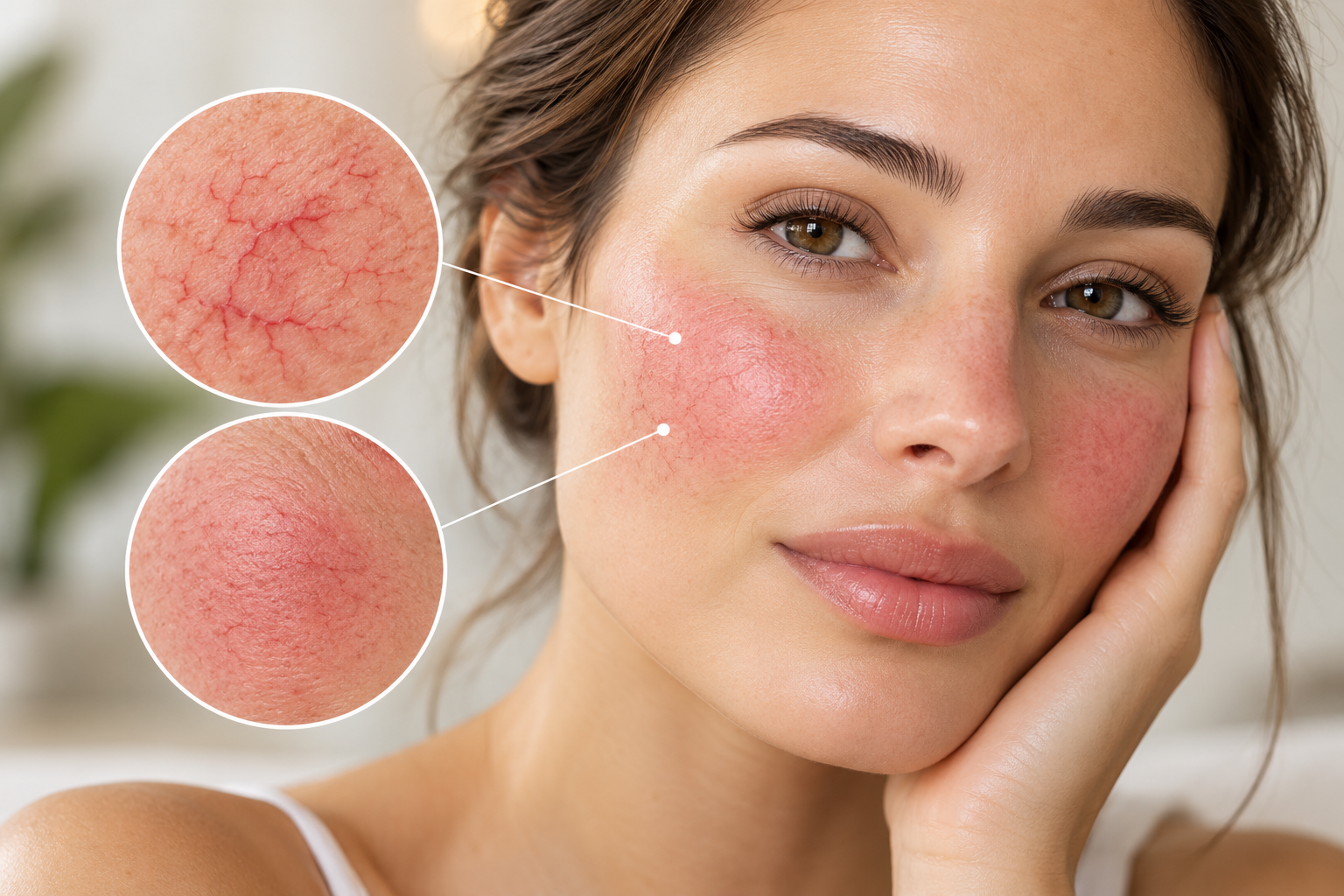
1. Why Does Facial Redness Occur? Facial redness can develop for several reasons. In many cases, multiple factors contribute to the problem. Common triggers include: Temperature changes: Cold weather, heat, and sudden temperature fluctuations can increase redness. Sun exposure: UV radiation can damage the skin and aggravate existing redness. Sensitive skin: A weakened skin barrier may cause irritation, burning, and tightness. Unsuitable skincare products: Harsh exfoliants, fragrances, and irritating ingredients can make redness worse. Individual triggers: Stress, alcohol, spicy foods, and hot beverages can cause facial flushing in some people. Not all facial redness indicates couperose or rosacea. An important distinction is whether the redness is temporary or persistent. 2. What Is Couperose, and How Can You Recognize It? Couperose is a term commonly used in cosmetics to describe visible, enlarged small blood vessels, particularly around the cheeks and nose. Typical signs include: Small, visible red blood vessels on the cheeks or nose Recurring or persistent facial redness Sensitivity to temperature changes Skin that becomes irritated easily These visible blood vessels are medically known as telangiectasias. Important: Couperose is not a clearly defined medical diagnosis. Similar symptoms can occur with rosacea and other skin conditions. Persistent redness should therefore be evaluated by a dermatologist. 3. Couperose vs. Rosacea: What's the Difference? Although the terms are sometimes used interchangeably, they are not identical. Couperose is generally used as a cosmetic description of visible blood vessels and redness. Rosacea, on the other hand, is a chronic inflammatory skin condition that may cause persistent redness, flushing, visible blood vessels, burning sensations, and sometimes inflammatory bumps or pustules. If rosacea is suspected, professional medical evaluation is recommended. Cosmetic skincare may help support the skin, but it does not replace medical treatment. 4. What Skincare Helps Reduce Facial Redness? When dealing with sensitive, redness-prone skin, a gentle and consistent skincare routine is often more beneficial than using numerous active products. Gentle Cleansing Choose a mild, preferably fragrance-free cleanser and use lukewarm water. Avoid aggressive scrubbing, harsh exfoliation, and excessive rubbing. Strengthening the Skin Barrier Products containing ceramides, glycerin, or panthenol may help maintain hydration and support the skin's protective barrier. Daily Sun Protection Sun exposure is a common trigger for facial redness. A well-tolerated, broad-spectrum sunscreen with SPF 30 or higher is an important part of daily skincare. Identifying Your Personal Triggers Everyone's skin responds differently. Pay attention to the products, temperatures, foods, or environmental factors that seem to worsen your redness. 5. Can Professional Cosmetic Treatments Help with Facial Redness? Professional cosmetic treatments can complement a gentle home skincare routine, particularly when the skin is sensitive or easily irritated. The goal should be to improve skin comfort, support hydration, and protect the skin barrier rather than aggressively exfoliate or stimulate the skin. A gentle facial treatment may include: Mild cleansing without harsh ingredients Hydrating and soothing skincare products A calming facial mask Barrier-supporting moisturizers Personalized skincare recommendations What About Red LED Light Therapy? Red LED light therapy is increasingly used in cosmetic treatments as a non-invasive approach to skin care. Some research suggests that certain light-based treatments may have beneficial effects on the skin. However, scientific evidence specifically supporting red LED therapy for couperose or rosacea-related redness remains limited. Red LED therapy should therefore be considered an optional complementary treatment, not a proven solution for visible blood vessels. Is Radiofrequency Suitable for Redness-Prone Skin? Radiofrequency (RF) treatments generate heat within the skin and are primarily used for cosmetic skin-firming purposes. Because heat can trigger flushing, RF is generally not the first choice for people with active facial redness or rosacea-prone skin. Treatment suitability should always be assessed individually. 6. Can Visible Blood Vessels on the Face Disappear? There is an important difference between temporary skin redness and permanently enlarged blood vessels. While gentle skincare may reduce irritation-related redness, established visible blood vessels generally cannot be removed using creams or conventional cosmetic facials. Dermatological treatments such as vascular lasers or intense pulsed light (IPL) may help reduce certain visible blood vessels. A qualified medical professional can determine whether these procedures are appropriate. 7. Common Skincare Mistakes That Can Make Redness Worse Some skincare habits may unintentionally aggravate sensitive skin. Try to avoid: Very hot water and facial steaming Harsh mechanical scrubs Excessive rubbing with towels or cleansing brushes Frequently switching skincare products Skipping daily sunscreen Heat-intensive cosmetic procedures if heat triggers your redness Consistency and gentle care are often more helpful than constantly experimenting with new products. 8. Gentle Facial Treatments for Sensitive Skin If your skin frequently feels irritated, tight, or uncomfortable, a professionally tailored facial treatment may help improve hydration and support the skin barrier. A calming facial focuses on gentle skincare, skin comfort, and protecting the skin's natural defenses. Before any treatment, your skin condition should be carefully assessed. Persistent, worsening, or inflammatory redness should first be evaluated by a dermatologist. Give Your Sensitive Skin the Care It Deserves Your skin doesn't always need stronger products or more intensive treatments. Sometimes, a gentler approach is exactly what it needs. Discover how a personalized facial treatment can support your skin's comfort and help you establish a skincare routine suited to your individual needs. Book a personalized skin consultation and find the right care for your skin. Frequently Asked Questions (FAQ) What helps reduce facial redness quickly? For temporary irritation, a cool (not ice-cold) compress, gentle moisturizer, and avoiding known triggers may help. Persistent redness should be medically assessed. Can couperose be treated with cosmetic facials? Cosmetic facials generally cannot remove established visible blood vessels. However, gentle treatments may support the skin barrier and reduce irritation-related redness. Is red LED light therapy good for couperose? Red LED light therapy is used in cosmetic skincare, but there is currently insufficient scientific evidence to confirm that it reliably improves couperose or rosacea. Which facial treatment is best for sensitive skin? Gentle, hydrating treatments that avoid excessive heat, harsh exfoliation, and irritating ingredients are often better tolerated. The most suitable treatment depends on the individual's skin condition. Can stress cause facial redness? Yes. Stress can trigger or worsen facial flushing in some people, particularly those with rosacea-prone skin.